Madeira wine is fortified with grape spirit, then aged with heat and oxygen for at least three years. Heat and air damage most wines. On Madeira they are the method, and they are the reason an opened bottle keeps for weeks.
We explain this process to our guests every Wednesday and Friday, and the same questions come up each time. This guide follows the wine in the order it is made: the vineyard, fermentation, fortification and the long, warm ageing that gives Madeira its character. Much of that method was worked out in the 18th century, when merchants found that wine shipped to the tropics and back tasted better than wine that never left the island.
Where Madeira Wine Starts: Terraces, Grapes and Harvest
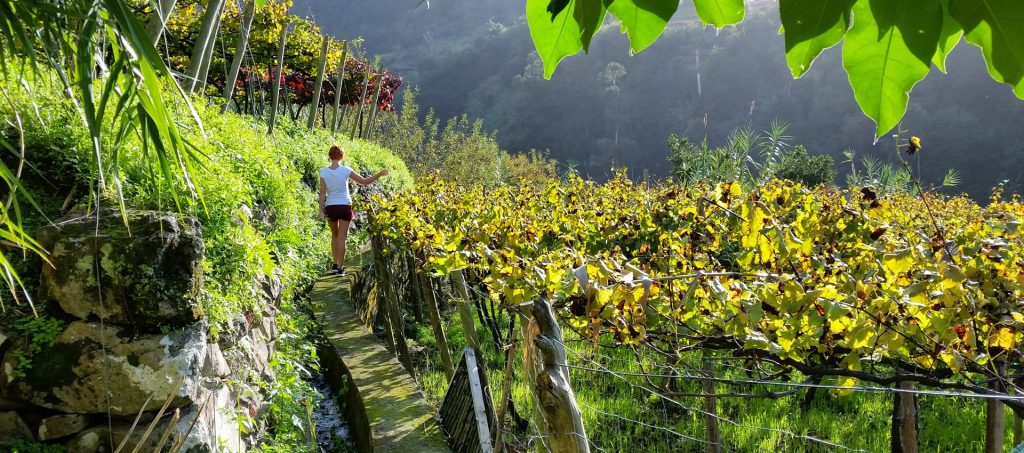
Madeira’s vineyards are small and steep. Most sit on narrow stone terraces, called poios, cut into the volcanic slopes. Many vines grow on low pergolas known as latadas, which keep the grapes off the damp ground and leave space for vegetables underneath. Machines cannot work these plots, so the grapes are picked by hand.
The most planted grape is Tinta Negra, a red variety used in most Madeira wine. The four traditional white grapes are Sercial, Verdelho, Boal and Malvasia. When a label names one of them, at least 85% of the wine comes from that grape.
Harvest starts in August at lower altitudes on the south coast and moves uphill and north from there. The season changes what our guests see. On the January drive to São Vicente, the pergolas are bare. In late August, the same slopes are full of pickers, and harvest traffic slows the roads around Estreito de Câmara de Lobos.
Fermentation and Fortification: How Madeira Wine Gets Its Sweetness
After pressing, the juice starts to ferment. Yeast turns the grape sugar into alcohol. At a chosen moment, the winemaker adds grape spirit at 96% alcohol. The spirit stops the fermentation, and the sugar that is left stays in the wine.
That moment decides the style. For the sweetest wines, producers fortify early, often after about a day of fermentation. For the driest, they let fermentation run for around a week first. The finished wine usually sits between 17% and 22% alcohol.
Fortification did not start on Madeira. Merchants borrowed it from Sherry in Spain and from Port on the Portuguese mainland. At first it was close to a trade secret. Brandy was added only when the wine was shipped, so that it would arrive in good condition. Today the rules are strict: the spirit must be a regulated 96% grape spirit, added at the right point of fermentation and before the ageing begins.
This is where guests usually ask if Madeira is simply Port from an island. Both wines are fortified. The difference comes next. Port lodges in Vila Nova de Gaia are kept cool, while Madeira producers want warmth and air. We cover the full comparison in how Madeira wine differs from Port.
Vinho da Roda: The Voyage That Shaped Madeira Wine
Madeira sat on the main Atlantic trade routes, and ships heading to the Americas and the East Indies stopped in Funchal to load wine.
Merchants noticed that casks which crossed the tropics and came back tasted softer and richer than casks that stayed behind.
They began sending wine on the round trip on purpose. This wine was called vinho da roda, or “round-trip wine”. Some casks stayed on board for years. The result was the mellow Old Madeira that buyers in America and Britain wanted most.
On the island, merchants also tried to copy the voyage without the ship. They kept bottles on shelves beside sunny windows. They stored casks in warehouses with glass roofs. Some buried bottles in horse dung for a few months to keep them warm. That last detail is the one our guests repeat at lunch.
Demand explains the effort. The Methuen Treaty of 1703 lowered taxes on the trade of English textiles and Portuguese wine. Madeira was also part of the triangular trade between the island, the New World and Britain. By the end of the 18th century, Old Madeira was fashionable in England. One reason was the return of British nationals from America after independence. Another was how hard it became to trade with France after the Revolution of 1789. The London auction house Christie’s began selling old Madeira in 1776.
We show this history in the cask on our Full Day Wine Tour. The day starts at Blandy’s Wine Lodges on Avenida Arriaga in Funchal, where the Blandy family has made Madeira wine since 1811. The tour runs on Wednesdays and Fridays, lasts eight hours and costs €210 per person, with 12 tastings, an espetada lunch and pickup from hotels in Funchal.

Estufagem: How Madeira Wine Is Aged with Heat
The first recorded estufa, or heated wine store, belonged to Pantaleão Fernandes in 1794. The idea was to warm the wine day and night for several months and copy the effect of a tropical voyage in less time and at a lower cost. It took years, and a lot of burnt wine, to get the heat right. In 1800 the merchant John Leacock wrote that new wine given three months in the estufa could pass for wine of four or five years old.
Today, estufagem happens in stainless steel tanks heated by hot water coils. The rules set a maximum of 50°C and a minimum of three months, and the Madeira wine institute, IVBAM, controls the process. At Blandy’s, the wine is warmed to about 45°C over four months, then rests for two years in large wooden vats.
Estufagem is used mainly for young wines made from Tinta Negra and sold as three-year-old Madeira. The flavour is simpler: caramel, dried fruit and clear acidity. A three-year-old wine will not show the depth of a 20-year-old, and we tell guests that directly. It also costs a fraction of the price, and it is the Madeira you are most likely to be served in a restaurant.
Canteiro: The Slow Way to Age Madeira Wine
Canteiro is the older method, and the one used for the best wines. The name comes from the wooden beams, or canteiros, that the casks rest on. The casks sit on the upper floors of the lodges, where the sun heats the roof. Most are American oak and hold around 650 litres. They are never filled to the top, so the wine meets air slowly over the years. Water evaporates, and the acidity, sugar and alcohol become more concentrated.
There is no shortcut here. A Colheita, a wine from a single harvest, spends at least five years in cask. A Frasqueira spends at least 20, and many stay far longer.
On summer visits to Blandy’s, guests notice that the cask rooms are warmer than the street outside, and the smell of wood and old wine reaches them before the casks do. In January the difference is smaller. Later in the day, on the way back to Funchal, we stop at a producer that works with modern equipment. Seeing traditional casks in the morning and steel tanks in the afternoon is the clearest way we have found to explain the two methods.
What the Ageing Method Means for Your Glass
A Madeira label tells you most of what you need. Three years almost always means estufagem. Five, 10 and 15 years are blends made to show the character of that age. Colheita and Frasqueira come from a single year and are aged in canteiro. The grape name tells you the sweetness: Sercial is the driest, then Verdelho, then Boal, and Malvasia is the sweetest. If you want to taste the styles side by side, start with our guide to Madeira wine tasting.
See How Madeira Wine Is Made on Our Full Day Wine Tour
The Full Day Wine Tour is built for guests who want to understand how the wine is made, as well as taste it. It is a long day. You spend eight hours with us, and part of that time is on the road to São Vicente on the north coast, about 45 minutes each way on the via rápida. If that is more than you want, the Food & Wine Walking Tour (€95) includes a basic tasting at Blandy’s. It is a food and culture walk through Funchal, and it does not cover how the wine is made.
To book or check availability, write to hello@winetoursmadeira.com or call (+351) 911 911 711.
FAQ: How Madeira Wine Is Made
Why does Madeira wine last so long after opening?
Madeira has already been exposed to heat and air during production, so opening the bottle changes very little. An opened bottle kept upright in a cool cupboard stays in good condition for weeks. The older and sweeter styles often last longer.
Is Madeira wine the same as Port?
No. Both are fortified with grape spirit, but Port is aged in cool conditions and Madeira is aged with heat and oxygen. That ageing gives Madeira its caramel and dried-fruit character.
What is the difference between estufagem and canteiro?
Estufagem heats the wine in tanks, up to 50°C for at least three months, and is used mainly for younger wines. Canteiro ages the wine in oak casks in warm lodge lofts for years, with natural heat only. Canteiro wines are more complex and cost more.
How long does it take to make Madeira wine?
The youngest Madeira wines are sold at three years old. A Colheita spends at least five years in cask, and a Frasqueira at least 20. Some casks in Funchal’s lodges hold wine that is many decades old.
Is Madeira wine sweet?
It depends on when the fermentation is stopped. Sercial is the driest style and Malvasia the sweetest, with Verdelho and Boal in between. Guests who expect a dessert wine are often surprised by how dry a Sercial tastes.
When is the grape harvest in Madeira?
Harvest starts in August and continues later at higher altitudes. The island marks it each year with the Madeira Wine Festival, which includes grape picking and traditional events.