Madeira was the most important wine in colonial America. For much of the 18th century, the American and Caribbean colonies took about three-quarters of the wine the island exported. It survived the Atlantic crossing, it improved on the way, and British trade law made it easier to buy than French wine.
American guests on our tours usually know one part of this story already: the toast after the Declaration of Independence. The full history is longer. Some of the famous details are well documented, and some are repeated far more often than the records support. This guide separates the two.
Why Madeira Wine Reached America First
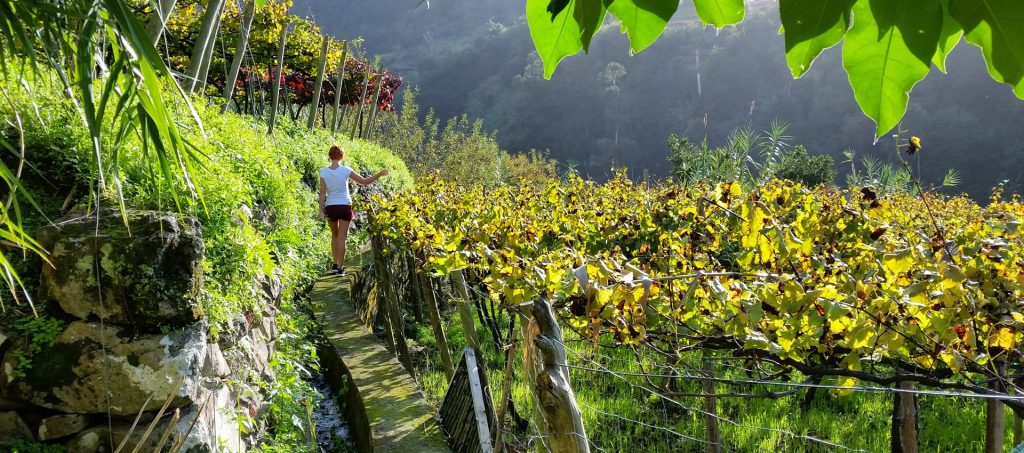
Madeira did not start as a wine island. In the 16th century its money came from sugar cane. Brazil then began to produce sugar at lower prices, and the island’s soil was exhausted and prone to crop disease. Most of the cane fields on Madeira were replanted with vines.
From the 1640s, Lisbon merchants controlled Portugal’s trade with Brazil. That pushed the foreign merchants based in Funchal, many of them British, to find other buyers for Madeira wine. They found them in the British colonies, which drank a lot of wine and made none of their own.
British law helped. The Staple Act of 1663 required most European goods bound for the colonies to pass through England first. Wine from Madeira and the Azores was exempt. A cask could sail straight from Funchal to Barbados, Charleston or Boston without the extra cost of an English stop.
The wine also suited the voyage. Bordeaux and other table wines often spoiled at sea. Madeira came back from the tropics softer and richer, which is why producers on the island still heat the wine today. We explain that process in how Madeira wine is made.
Shipping made the trade profitable. Ships sailed west to load fish, flour, tobacco, rice and sugar in America and the Caribbean. On the outward leg their holds were often half empty, because English textiles were light. Wine filled that space and paid better. After the Methuen Treaty of 1703 lowered duties on Portuguese wine and English textiles, Madeira sat at one corner of a triangle: cloth came from Britain, wine went west to the Americas and north to Britain, and flour came back to the island.
How Much Madeira Wine the Colonies Drank
The earliest surviving export records, from 1727 to 1738, show that an average of 70% of the wine leaving Madeira went to the British West Indies and British North America.
That share fell to about half during the Seven Years’ War, from 1756 to 1763. Ships risked capture at sea, and freight and insurance became much more expensive. After the war, the trade recovered. The Naval Office Shipping Lists for British North America show that Madeira made up 76.1% of all the wine the colonies imported.
This is the number that surprises our American guests most. Many of them have never tasted Madeira. Two and a half centuries ago, it was close to the only wine their cities drank.
The Liberty Affair: Madeira Wine and the Road to Revolution
From 1764, Britain charged a duty on Madeira landed in the American colonies, and the Townshend Acts of 1767 tightened customs control. In practice, customs officers in colonial ports had long let part of a cargo through untaxed.
In 1768, John Hancock’s sloop Liberty arrived in Boston with 25 pipes of Madeira. This time the customs commissioners did not look away. They seized the ship in a dispute over the duties, and crowds in Boston rioted. The case against Hancock was later dropped. Historians see the Liberty affair as an early step towards the Boston Tea Party five years later, and towards the American Revolution.
We tell parts of this story during the private lodge visit on our Full Day Wine Tour. The tour runs on Wednesdays and Fridays, lasts eight hours and costs €210 per person, with three producer stops, 12 tastings, an espetada lunch and pickup from hotels in Funchal.
Madeira Wine and the Founding Fathers: What the Records Show
George Washington is the best-documented case. The library at Mount Vernon records his first order for Madeira in 1759, and his orders continued for the rest of his life. A guest in 1798 wrote that Washington liked to talk after dinner with a glass of Madeira in his hand. On 13 December 1799, the day before he died, his household wrote to a Madeira importer.
Jefferson, Adams, Madison, Franklin and Hancock all drank Madeira. Madison and Jefferson ordered directly from shippers on the island and specified the colour, body and sweetness they wanted.
The famous toasts are less certain. It is often said that the signers toasted the Declaration of Independence with Madeira in 1776, and that Madeira was served at Washington’s inauguration in 1789. Both are likely, because Madeira was what these men drank. We have not found a first-hand record of either toast, and neither have the American importers who have looked. American guests ask us about the Declaration toast more than any other story, so we give them this answer directly.
One claim we do not repeat. Several websites say President Obama toasted his 2009 inauguration with Madeira. The official inaugural luncheon that year served three California wines.
Madeira Parties: How Americans Tasted Madeira Wine
In the 19th century, collectors on the east coast held Madeira parties, from Boston to New Orleans, including Philadelphia, Baltimore, Savannah and Charleston. A Madeira party usually started in the late afternoon. Eight to a dozen men shared and discussed a handful of old Madeiras over two or three hours or more. Physician and writer Silas Weir Mitchell described one in Philadelphia in his 1895 story “A Madeira Party”.
American buyers often named their wines after the family, the ship or the city that brought them in. Some of those names are back on shelves today.


Why Madeira Wine Faded in the United States
After independence, American taste moved towards French and other continental wines. On the island, powdery mildew (oidium) destroyed vineyards from 1851, and phylloxera followed in the 1870s. The American Civil War and then Prohibition closed what was left of the market.
The connection did not disappear. The Rare Wine Company, an American importer, works with Vinhos Barbeito on a Historic Series named after the old Madeira cities: Boston Bual, Charleston Sercial, New York Malmsey, Savannah Verdelho and Baltimore Rainwater. If you want a bottle that carries this history home, those names are worth looking for.
A trade-off worth knowing: our tours are about tasting Madeira and seeing how it is made. We tell the American story where it fits, mostly at the lodge, but the Full Day Wine Tour is not a history tour. If you are more interested in Funchal’s food and customs than in wine production, the Food & Wine Walking Tour (€95) is a cultural walk through the city with regional food and local drinks, and one of its nine stops is a basic tasting at Blandy’s.
Taste the Wine the Founding Fathers Drank
Most of our American guests taste Madeira for the first time on the island, and the first surprise is often how dry a Sercial can be. On the Full Day Wine Tour, you visit three producers, taste Madeira at the Blandy’s lodge in Funchal and see the casks where it ages. It is the same kind of wine that once filled glasses in Boston and Philadelphia. Before you come, our Madeira wine tasting guide explains what to expect in the glass.
To book or check availability, write to hello@winetoursmadeira.com or call (+351) 911 911 711.
FAQ: Madeira Wine in American History
Did the Founding Fathers really drink Madeira wine?
Yes. George Washington’s orders for Madeira are recorded from 1759 until his death in 1799. Jefferson, Adams, Madison and Franklin also drank it, and some ordered directly from shippers on the island.
Was the Declaration of Independence toasted with Madeira?
Probably, but there is no surviving first-hand record of what the signers drank that day. The story is likely because Madeira was the wine these men drank in 1776.
Why was Madeira so popular in colonial America?
It survived long sea voyages and improved in the heat. British law also let Madeira sail directly to the colonies, while most European wine had to pass through England first.
What was a Madeira party?
It was a 19th-century gathering, common in cities such as Philadelphia, Baltimore, Savannah and Charleston. Around eight to twelve men spent an afternoon tasting and discussing several old Madeiras.
Can you still buy Madeira wine in the United States?
Yes. Several Madeira producers export to the US, and specialist importers sell older and single-harvest wines. The Historic Series, made by Vinhos Barbeito for the Rare Wine Company, is named after the American cities that once drank the most Madeira.
Where can I learn about Madeira’s American history on the island?
We tell parts of the story on our Full Day Wine Tour, during the private visit to the Blandy’s lodge in Funchal. The tour focuses on tasting and production, with history where it fits.