Records place the first shipment of Madeira wine to England in 1456, 37 years after the island was discovered. For the next four centuries, British merchants, sailors and soldiers shaped how the wine was made, sold and drunk. Several names on Madeira labels today come from that period.
We tell parts of this story every week at Blandy’s Wine Lodge in Funchal. This article puts it in one place, with the dates checked, and separates what is documented from what is legend.
Madeira Wine History at a Glance
1419: Portuguese navigators reach Madeira and settlement begins.
1455: the Venetian explorer Alvise Cadamosto records Malvasia vines on the island.
1456: first recorded shipment of Madeira wine to England.
1663: the Staple Act lets Madeira wine sail directly to English colonies.
1768: Captain Cook loads 3,032 gallons of wine in Funchal.
1811: John Blandy founds his wine business in Funchal.
1851–1872: oidium and then phylloxera destroy most of the island’s vineyards.
1950: Winston Churchill paints in Câmara de Lobos and drinks a 1792 Madeira.
1478: The Duke of Clarence and the Butt of Malmsey
The oldest British story linked to Madeira wine is an execution. In February 1478, George, Duke of Clarence, brother of King Edward IV, was put to death in the Tower of London for treason. Legend says he was drowned in a butt of Malmsey, the English name for sweet wine made from Malvasia. Shakespeare used the scene in Richard III.
Most historians treat the drowning as legend. The origin of the wine is also uncertain. In 1478, most Malmsey sold in England came from Greece and Crete. What is documented is that Malvasia was already growing on Madeira by 1455, and that the English market wanted exactly that kind of wine.
This is the question guests ask most often when we pour a Malmsey. Our answer: probably not wine from this island, but the same grape and the same English demand.


1662–1663: A Royal Wedding and a Trade Exemption
In 1662, Charles II of England married Catarina of Bragança, a Portuguese princess and sister of King Afonso VI. Her dowry included the ports of Tangier and Bombay. Madeira stayed Portuguese.
A story still told on the island says the Portuguese court was ready to add Madeira to the dowry if needed. It came with a second legend: that an Englishman, Robert Machim, had been shipwrecked on Madeira with his lover, Anne d’Arfet, before the Portuguese arrived. Both stories are legend, not record.
The alliance mattered more than the romance. In 1663, Parliament passed the Staple Act. From March 1664, European goods bound for English colonies had to pass through English ports first. Wines from Madeira and the Azores were among the few exceptions.
By the end of the 17th century, New England and the West Indies were the main destinations for Madeira’s casks.
The 18th Century: British Wine Houses in Funchal
British merchants settled in Funchal to run that trade. John Leacock arrived in 1741, aged 15, to work for a wine firm. Cossart Gordon was founded in 1745. By the late 1700s, dozens of British houses were shipping wine from the island.
London was slower to follow. In the first half of the 18th century, Madeira sold in London for less than an ordinary white wine. The colonies were the real market, and the profits went to the British houses in Funchal.
The wine changed during this period. Producers added spirit to stabilise it for long voyages. Casks that crossed the tropics in ships’ holds came back tasting better. That discovery is the origin of the heating process we explain in how Madeira wine is made.
1768: Captain Cook Loads 3,032 Gallons in Funchal
On 13 September 1768, HMS Endeavour anchored off Funchal at the start of James Cook’s first voyage to the Pacific. Cook’s journal records that the ship took on 3,032 gallons of wine and 10 tons of water. In a letter to the Admiralty, he wrote that they had loaded as much wine as the ship could stow.
Madeira was a ship’s wine because it survived heat and time. Some accounts say it was taken to prevent scurvy. Cook’s own records do not support that.
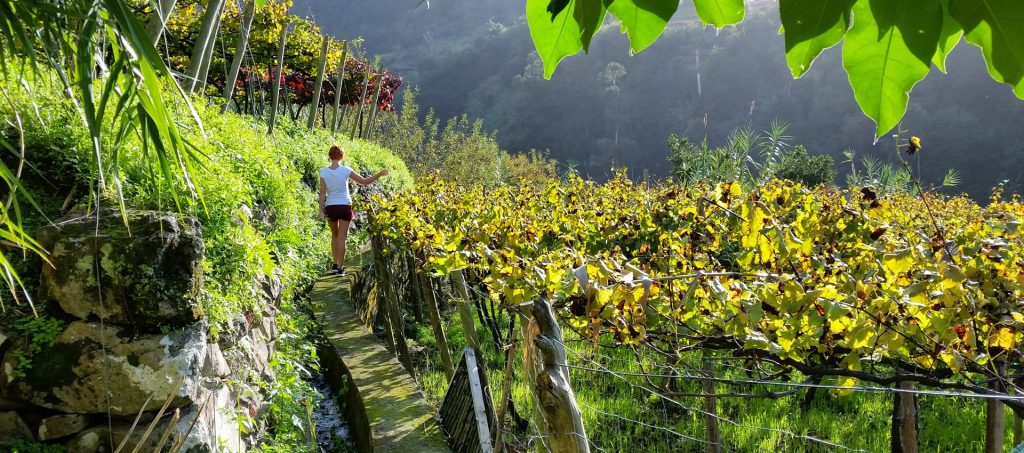
Cook arrived in the middle of the harvest. Guests who join us in September still see grapes coming off the terraces. In January the vines are bare.
1801–1814: British Troops and the Arrival of John Blandy
During the Napoleonic Wars, British forces occupied Madeira twice: from July 1801 to January 1802, and from December 1807 to 1814. The stated aim was to keep the island out of French hands.
John Blandy, from a farming family in Dorset, arrived in early 1808. For many years it was believed he came as a soldier with General Beresford’s troops. A letter found in 2006 changed that. Dated 23 December 1807, it introduced him to Funchal wine merchants as a young man travelling for his health and looking for work in a counting house. In 1811 he founded his own business with his brothers Thomas and George.
Blandy’s is now run by the seventh generation of the family. It is the only founding family of the Madeira wine trade that still owns and manages its original company. British guests are often surprised to learn that the family is English in origin and still lives on the island.
Taste this history where it happened. Our Full Day Wine Tour runs on Wednesdays and Fridays. It starts with a private visit to Blandy’s Wine Lodges at Avenida Arriaga 28, continues to Quinta do Barbusano in São Vicente for still wines and an espetada lunch, and finishes at a producer in Estreito de Câmara de Lobos. Eight hours, 12 tastings, €210, with pick-up from Funchal hotels.
1851–1872: Oidium, Phylloxera and the Replanting of Madeira
In 1851 and 1852, oidium, a powdery mildew, reached Madeira’s vineyards. Production fell from about 8,000 pipes in 1851 to about 2,000 in 1854. In 1852, Charles Ridpath Blandy bought large stocks of mature wine. That decision is often seen as the start of the family firm’s growth.
Sulphur brought oidium under control. Then phylloxera, a root louse, arrived in 1872. Thomas Slapp Leacock, a descendant of John Leacock, developed a treatment in his own vineyard and sent his results to the University of Cambridge.
The replanting changed Madeira wine for good. Many growers replaced Sercial, Verdelho, Bual and Malvasia with Tinta Negra, which was easier to grow. Most of the Madeira served by the glass in Funchal restaurants is Tinta Negra. When a label names one of the four traditional grapes, at least 85% of the wine must come from that grape.
1950: Churchill, Câmara de Lobos and a 1792 Madeira
Winston Churchill spent the New Year of 1950 in Madeira and stayed at Reid’s Hotel in Funchal. He painted in Câmara de Lobos, the fishing town west of Funchal.
At a dinner in Funchal, he was served a 1792 Madeira bottled by Blandy in 1840. The wine has its own British story. When HMS Northumberland stopped in Funchal in August 1815, taking Napoleon to exile on St Helena, a pipe of the 1792 was bought for him. He never drank it. Churchill insisted on pouring the wine himself and reminded the table that Marie Antoinette was still alive when it was made.
On the Full Day Wine Tour, our last producer stop is in Estreito de Câmara de Lobos, on the slopes above the bay where he painted.
Where to Experience Madeira Wine History Today
You can visit Blandy’s Wine Lodges on your own. Here is how our tours fit, including their limits.
The Full Day Wine Tour is a wine tour first. We tell these stories between tastings, not as a lecture.
It is also a long day. The drive to São Vicente takes about 45 minutes on the via rápida, and the tour lasts eight hours. If you only have a morning free, it is not the right choice.
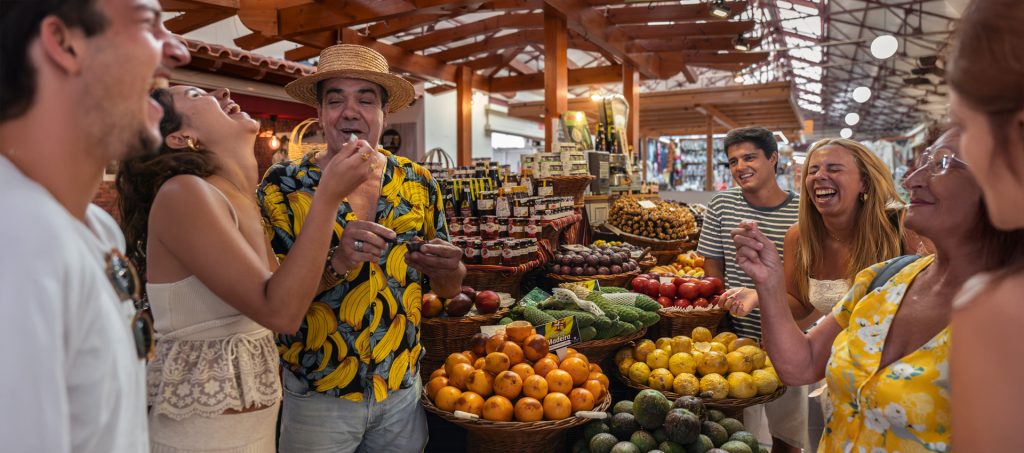
Our Food & Wine Walking Tour costs €95 and includes a basic tasting at Blandy’s, but it is not a wine tour. It is a walk through Funchal’s food and customs, with nine stops and two wine tastings. Choose it if the city interests you more than the vineyards.
If you have never tasted Madeira wine, read our Madeira wine tasting guide before your trip. It explains the styles you will meet in the glass.
Madeira Wine History: Frequently Asked Questions
When did Madeira wine become popular in Britain?
Records show Madeira wine reaching England in 1456. Its big growth came after 1663, when the Staple Act allowed it to sail directly to English colonies. In London, it was still sold as a cheap wine in the first half of the 18th century.
Did the Duke of Clarence really drown in Madeira wine?
Probably not. Most historians consider the 1478 drowning a legend, and the Malmsey drunk in England at that time came mostly from Greece and Crete. The grape, Malvasia, was already growing on Madeira by 1455.
Why were so many Madeira wine companies British?
The Staple Act of 1663 gave Madeira wine direct access to English colonies. British merchants moved to Funchal to control that trade. Houses such as Leacock, Cossart Gordon and Blandy’s date from the 18th and early 19th centuries.
Is Blandy’s still owned by the Blandy family?
Yes. John Blandy founded the company in 1811, and the seventh generation of the family runs it today. It is the only founding family of the Madeira wine trade still managing its original company.
Can I see historic Madeira wine cellars in Funchal?
Yes. Blandy’s Wine Lodges are at Avenida Arriaga 28. Our Full Day Wine Tour starts there with a private visit before heading to the north coast.
Do I need to know about wine to enjoy the Full Day Wine Tour?
No. Most of our guests have never tasted Madeira wine before the tour. We explain the styles as we pour, starting with the fortified wines at Blandy’s.
Book the Full Day Wine Tour on our tour page, or email hello@winetoursmadeira.com or call (+351) 911 911 711. For groups, ask us about the Premium Full Week Wine Tour.